Project at Stepstone

Salary Planner

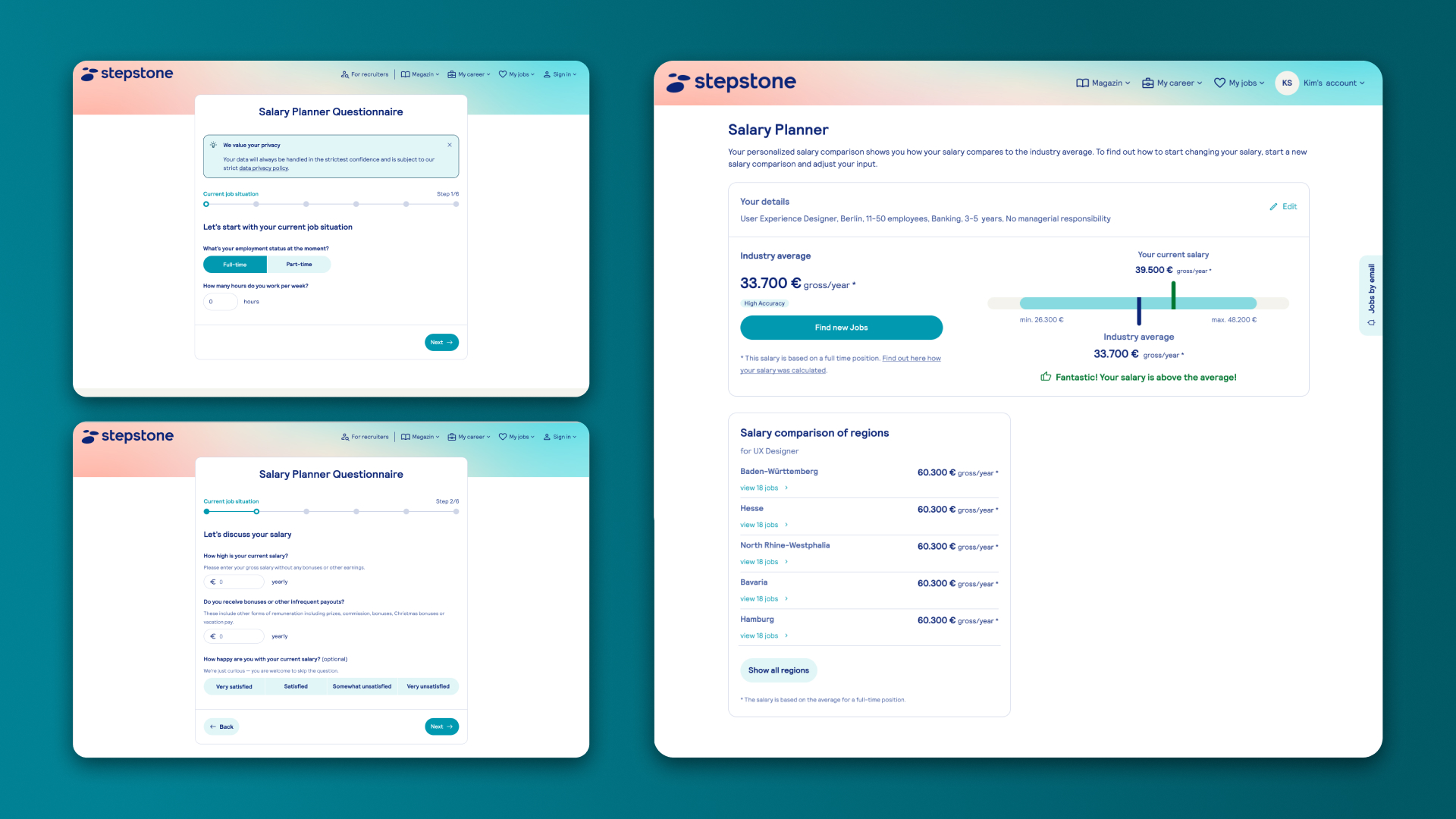
Stepstone's Salary Planner serves as a valuable tool empowering individuals to navigate their career trajectories with confidence.

By providing insights into potential salaries for both jobseekers and current positions, it helps users with information for negotiating salaries effectively.

Whether exploring new opportunities or seeking fair compensation in their current roles, the Salary Planner offers clarity and empowerment.
Role

UX Designer

Scope

Redesign of the 
Salary Planner product, as well of iteration of new features

Device

Web Desktop & Mobile

Timeframe

2020-2023

Overview

Leading the Redesign of the Salary Planner

The "Salary Planner" product underwent significant redesign under my responsibility as the design lead. Collaborating closely with product owners, developers, and researchers, we transformed the user experience from ideation to implementation.

At the same time the whole platform underwent a rebranding.
Collaboration

Redesigning Salary Planner in Close Partnership

As the responsible of the design process, I closely collaborated with product owners, developers, and researchers throughout every stage, from brainstorming to implementation. Using mainly tools like Figma for designing and prototyping and Miro for ideation workshops I facilitated seamless collaboration.


By leveraging our collective expertise and insights, we addressed user concerns and enhanced the product's usability and engagement. Through extensive user testing and surveys, we gained valuable feedback that informed our decision-making and drove iterative improvements.
User Problems

What Users Struggled With

The user problems identified in the initial phase of redesigning the Salary Planner were:

Complex & Lengthy Questionnaire:

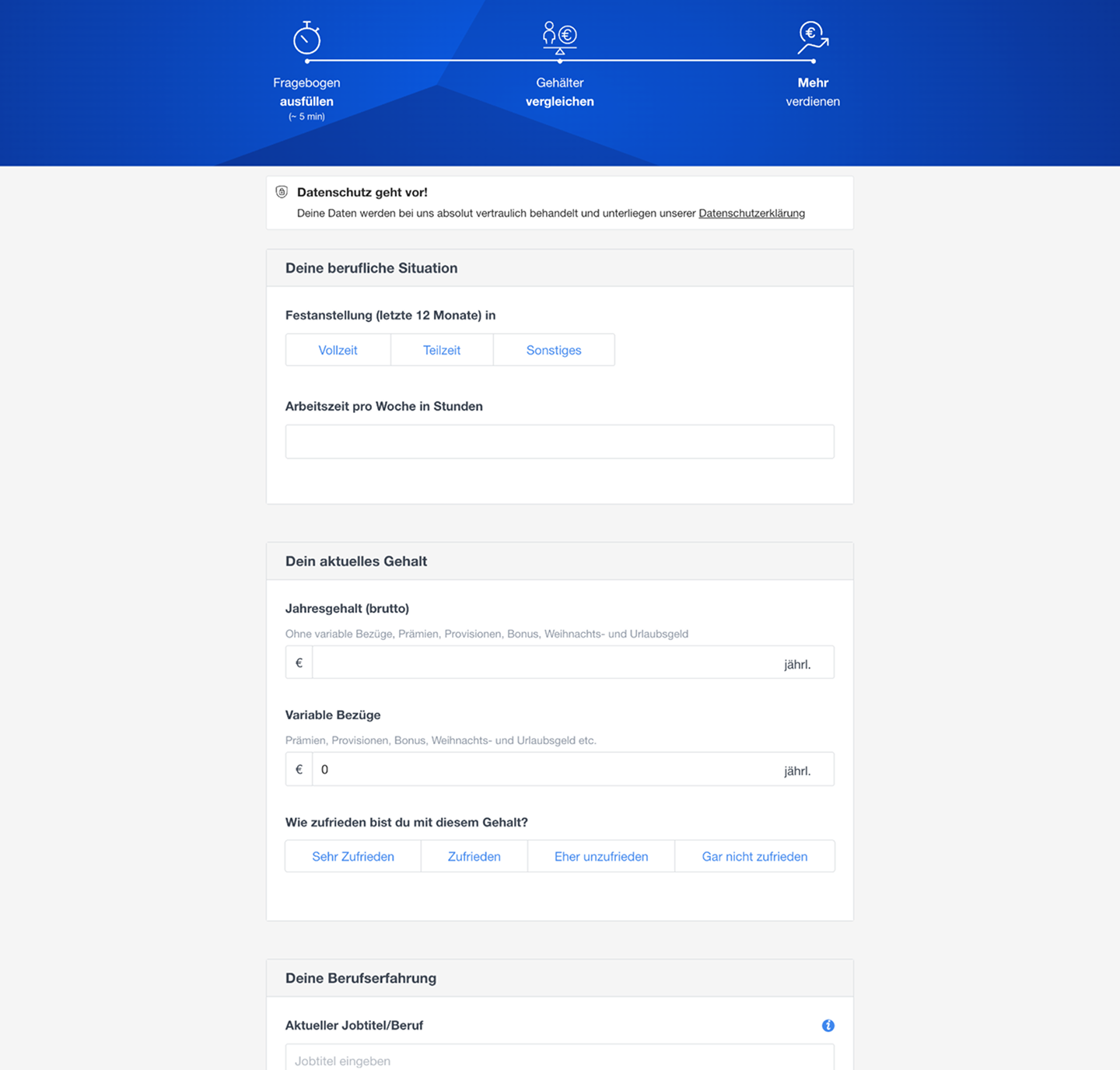
Users felt that the single-page survey took too long and was boring to go through. Because of this, they became frustrated, lost interest halfway, and often decided not to finish it.

Lack of 

Interactivity:

The old planner page was not interactive enough, providing minimal features aside from showing the user's current salary and occasional job suggestions. This resulted in a less enjoyable user experience.

Limited Insights & Personalisation:

Users wanted more insights into their salary compared to industry averages and wanted personalized job recommendations based on their data. The lack of these features limited the usefulness of the tool.
Before
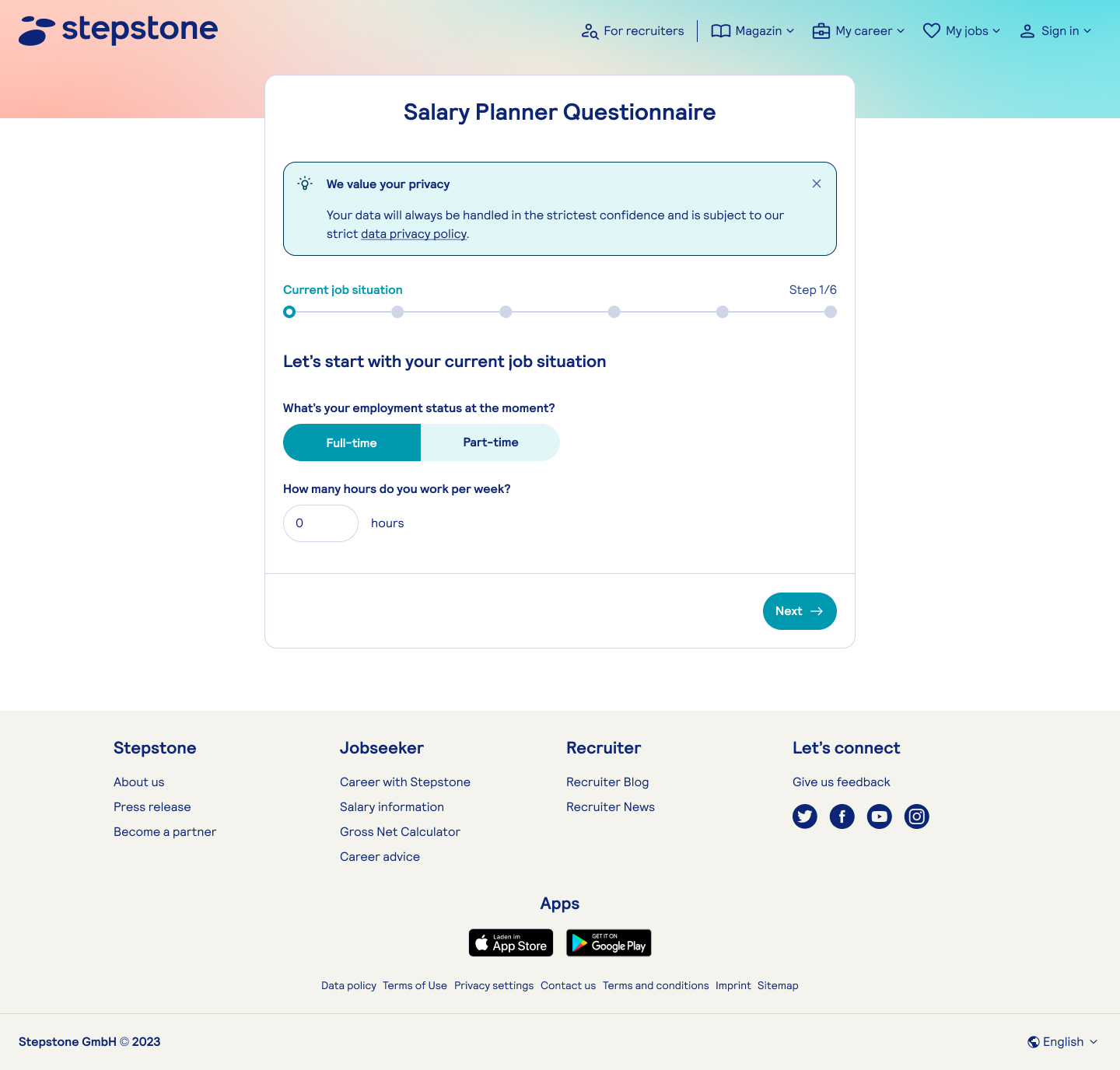
After
Goals

Goals Driving the Redesign

The primary objective was to increase the questionnaire conversion as well as the number of account creations and registrations for job alerts through the Salary Planner.

Additionally secondary goals were improving user-friendliness and assisting users in their tasks (Jobs to be done).
My Approach

Designing with Users in Mind

Overall, the process was characterized by a strong focus on user needs, comprehensive research and analysis, and continuous improvement of the product based on feedback and data.

Empathize

The process began with thorough research into user needs, thoughts and feelings of our users. This included on-site surveys, user interviews, and analysis of competitor products. Through this comprehensive research, user needs were better understood, and potential pain points were identified.

Define

In this step we articulated the design objectives of the redesign, focusing on enhancing the user experience and addressing identified pain points.

Ideate

I facilitated brainstorming sessions with the designers involved, the product owner and the developers to ideate on solutions. Afterwards I wireframed multiple design concepts to visualise potential solutions and iterated on them based on feedback.

Prototype

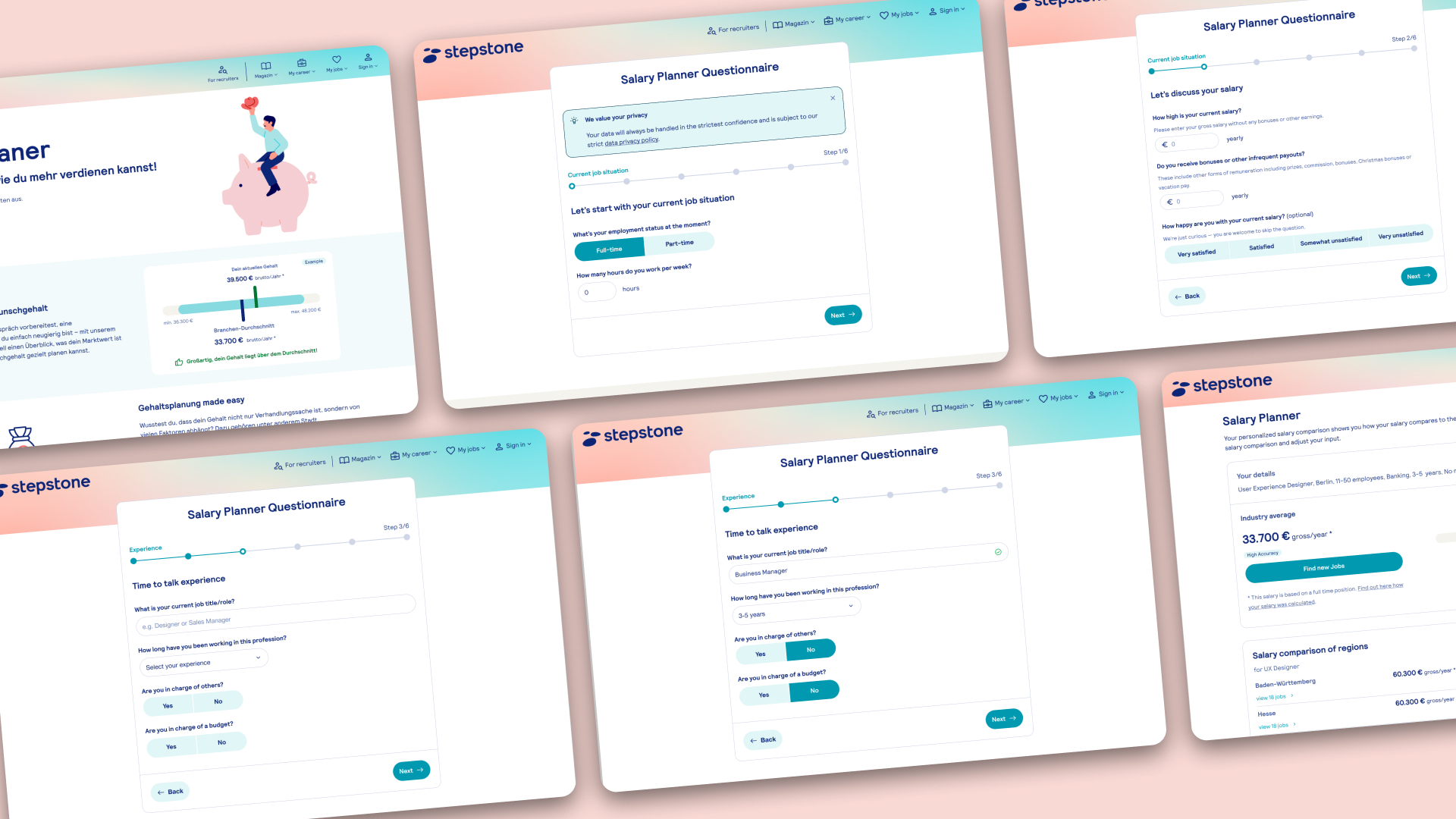
I went into the creation of prototypes taking into account the changes on the landing page to inform user expectations. I revamped the questionnaire to improve user friendliness and removed unneccessary questions. The simulation page underwent a complete redesign to offer more useful information and visual comparisons.

Test

Before implementation we did many rounds of usability testing. After implementation, more tests were conducted to assess the effectiveness of the changes. This involved analyzing conversion rates, user feedback, and other metrics.

Iterate

The process of product development and optimization was iterative and ongoing. Based on collected data and user feedback, continuous improvements and new features were implemented to continuously enhance the product and meet user needs.

"The conversion rate uplift was 11.83% and registrations per visitor increased by 6.72%."

Soon after we launched the new multipage questionnaire, moving away from the single page. After a successful A/B test completed in August, we proved that the new multipage questionnaire is much more user friendly and easy to complete, with a clearer journey through the progress bar. The conversion rate uplift (i.e., questionnaire submissions) was 11.83% and registrations per visitor increased by 6.72%.
Results & Impact

Measurable Outcomes and Successes

The results and impact of the redesigned Salary Planner were significant and multifaceted:

Increased User Engagement:

The changes implemented, such as the multipage questionnaire and enhanced simulation page, led to a notable increase in user engagement. Users found the tool more user-friendly and interactive, resulting in longer sessions and more frequent return visits.

Alignment with Business Goals:

The redesign efforts were aligned with the primary business goals of increasing account creations and job alert registrations. The positive outcomes observed directly contributed to achieving these objectives, thus demonstrating the effectiveness of the redesign in driving desired user actions.

Improved Conversion Rates:

The optimization efforts, particularly on the questionnaire, resulted in a significant uplift in conversion rates. Simplifying the process and removing unnecessary questions led to a smoother user experience, translating into higher conversion rates for account creations and job alert registrations.

Continued Iterative Improvement:

The iterative nature of the redesign process ensured that improvements were ongoing. By continuously monitoring user feedback and data metrics, further enhancements were made to the Salary Planner, ensuring its continued relevance and effectiveness in meeting user needs and business goals.

Enhanced User Satisfaction:

Through user feedback and testing, it became evident that the redesigned Salary Planner better met the needs of users. The provision of more relevant and useful information, along with improved usability, contributed to higher user satisfaction levels.
Overall, the results and impact of the redesigned Salary Planner were highly positive, leading to increased user engagement, improved conversion rates, enhanced user satisfaction, and alignment with business objectives.
Let's talk

Say Ciao & send me a message

If you’re hiring or want to explore collaboration, I’d love to hear from you.
Contact me
Tania Haas